Thu, 13-November-2025 // Cultural & Theme Tours
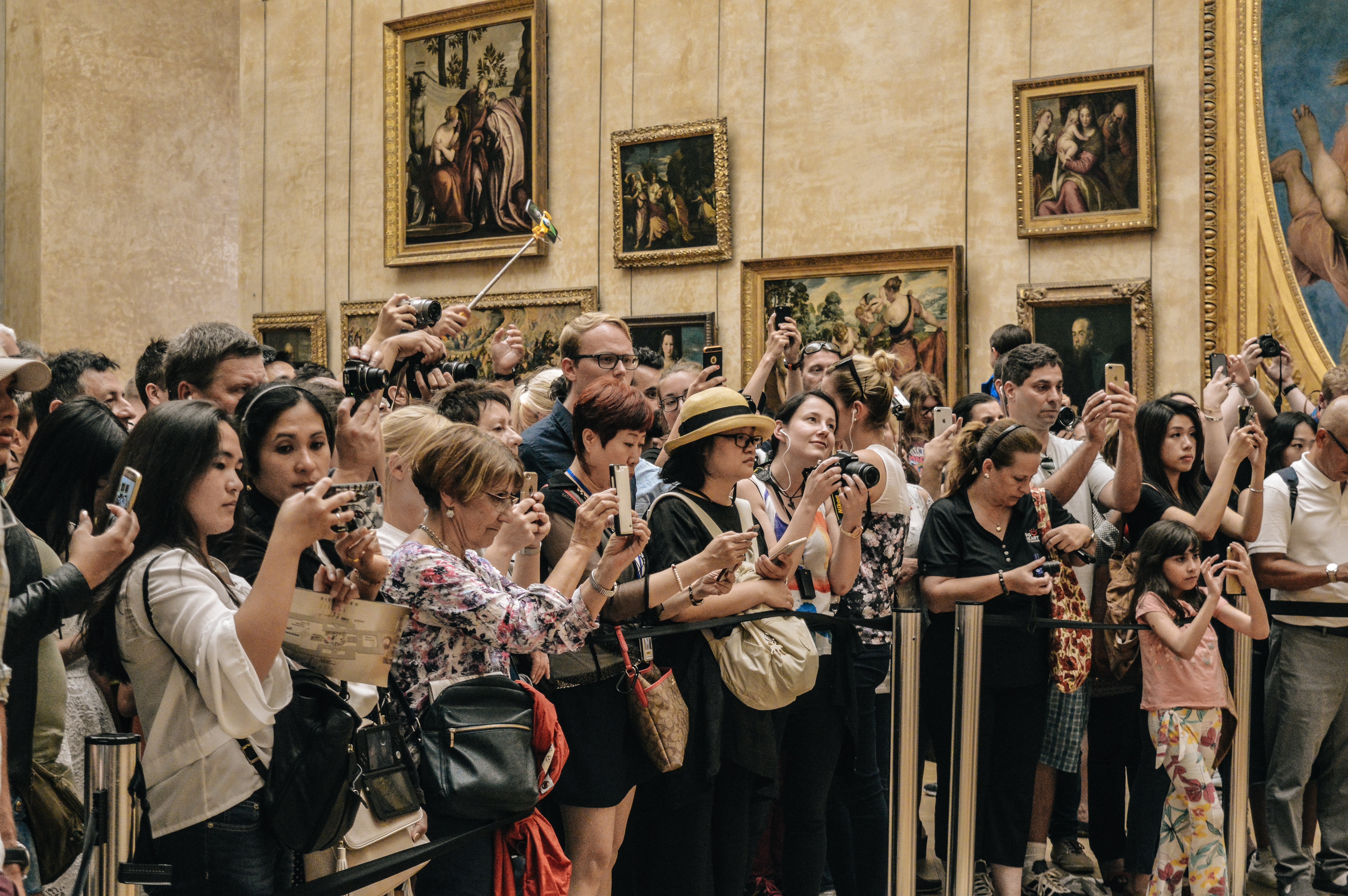
When you step into the Louvre Museum in Paris, surrounded by legendary creations like the Mona Lisa, the Venus de Milo, and the Winged Victory of Samothrace, it’s easy to imagine you’re witnessing the entire splendor of the world’s most famous museum.
But the reality is far more intriguing: what’s displayed in the galleries represents only a small glimpse of the Louvre’s true collection. Out of more than 615,000 cataloged artworks, fewer than 8% ever meet the public eye. The rest—thousands of paintings, sculptures, antiquities, and rare artifacts—are stored safely behind the scenes, hidden from millions of visitors yet still echoing with history.
Welcome to the Louvre’s unseen universe, where forgotten masterpieces rest in silence, waiting for their moment to return to the light.
Beyond the iconic marble corridors lies an enormous network of storage rooms, research labs, and climate-controlled vaults that only a handful of professionals ever see. This is the operational center of global heritage preservation.
Here, more than half a million treasures, from ancient Egyptian sarcophagi to Roman sculptures and delicate Renaissance drawings, are carefully organized and preserved. Some are too fragile to display, others are undergoing vital restoration, and many simply await their turn in future temporary exhibitions. Even the world’s largest museum cannot display every single treasure at the same time.
Each piece is kept under strictly controlled temperature and humidity levels. These artworks are not forgotten; they’re patiently safeguarded so future generations may one day admire them.
In 2019, the museum opened its cutting-edge Louvre Conservation and Storage Center in Liévin, northern France—a modern stronghold created specifically to protect global cultural heritage from natural risks like flooding.
Spanning over 18,000 square meters, this advanced facility houses more than 250,000 items from the museum’s vast collections, including Greek, Roman, and Islamic artwork. Here, science and art history come together seamlessly. Specialized curators and scientists use X-ray technology, 3D scanning, and microscopic pigment analysis to study and preserve each object in a timeless laboratory setting.
Many visitors wonder why such a massive collection isn’t fully displayed in Paris. The reasons are both practical and scientific:
There’s something profoundly poetic in knowing that beneath the Louvre’s majestic halls lie countless hidden artworks, preserved in absolute silence. Each one carries a unique story of human imagination, cultural devotion, or historical survival.
While some of these hidden items may one day reshape what we know about art history during a future gallery rotation, others live forever within secure digital archives. Together, they form the Louvre’s invisible soul—a secret collection that keeps the world’s most visited museum alive.
Even when the gallery lights dim and the last visitors depart, the Louvre continues to work behind closed doors. In secure underground storage areas and distant conservation centers, curators and scientists tirelessly restore, examine, and document the collection.
Every restored painting and every cataloged sculpture is an act of preservation, ensuring that the art of the past continues to shape the future. So the next time you stand before one of the Louvre’s masterpieces, remember: for every artwork on display, many more remain hidden, whispering their stories from the shadows, waiting to be rediscovered.
You might also like...
Secure Payment
Ways You Can Pay









Cityzore is administrated by Global Tours and Tickets Company
Copyright © 2026 Cityzore. All Rights Reserved

 Türkçe
 Français
 Русский
 Español
 Deutsch
 Italiano
 Português
 Nederlands
 عربى
عربى