Fri, 31-October-2025 // Cultural & Theme Tours
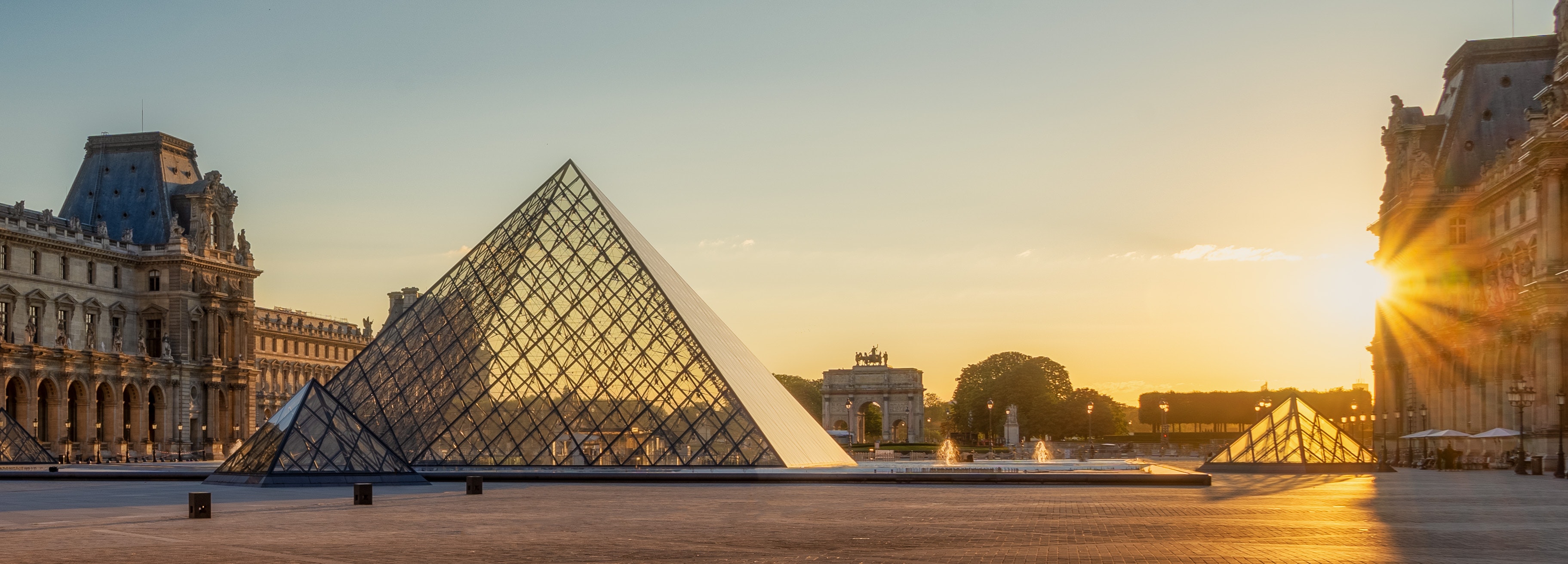
When you enter the Louvre Museum in Paris, surrounded by world-renowned icons like the Mona Lisa, the Venus de Milo, and the Winged Victory of Samothrace, it’s easy to believe you’re witnessing the entirety of the world’s greatest art collection.
But here’s a surprising truth about the Louvre's collection size: the artworks on display represent only a tiny fraction of the museum's full inventory. Out of more than 615,000 cataloged pieces, only about 8% are visible to the public in the galleries. The remaining thousands of sculptures, paintings, manuscripts, and ancient artifacts remain protected in secure storage facilities, hidden from view yet rich with history.
Welcome to the Louvre’s unseen universe—a secret world where masterpieces rest in silence, waiting for their next exhibition under the lights.
Beyond the museum’s grand public galleries lies a complex maze of conservation rooms, archives, and climate-controlled vaults rarely witnessed by everyday visitors. This is the operational heart of the institution.
Here, more than half a million artworks quietly reside, ranging from ancient Egyptian sarcophagi and Roman marble busts to fragile Renaissance drawings. Each object is meticulously documented, studied, and preserved by internal teams. Some pieces are too delicate to withstand constant light exposure, others await complex restoration, and many remain unseen simply because even the world’s largest museum lacks the square footage to showcase everything at once.
In 2019, the museum officially inaugurated the state-of-the-art Louvre Conservation Center in Liévin, northern France—a modern, high-tech stronghold dedicated to safeguarding global cultural heritage against natural risks like flooding.
Covering more than 18,000 square meters, this advanced facility houses over 250,000 artworks from across various Louvre departments, including Greek, Roman, Etruscan, and Islamic art collections. Inside Liévin, science and art history converge. Curators and conservators utilize advanced technologies like X-ray imaging, 3D scanning, and microscopic pigment analysis to protect and authenticate each piece for future generations.
Art lovers frequently ask: “If the Louvre owns over 600,000 pieces of art, why isn’t it all displayed to the public?” The reasons are both practical and scientific:
There’s an undeniable mystery in knowing that beneath and beyond the Louvre’s shining glass pyramid lie countless historic treasures resting in dark, climate-controlled environments. Each artifact carries a profound story of human creativity, cultural devotion, or historic survival.
While some of these hidden items may one day rewrite aspects of art history during a future rotation, others remain safely preserved in digital records and scholarly archives. Together, these hidden collections form the invisible soul and true heartbeat of the world's most visited museum.
Even after the gallery doors lock and the daily crowds depart, the Louvre remains highly active. Behind closed doors, specialized teams of conservators, historians, and scientists continue their work cleaning, restoring, analyzing, and protecting global heritage.
Every artwork cataloged and every classical sculpture preserved ensures that the treasures of past civilizations continue to inspire future generations. The next time you secure your Louvre tickets to admire its famous icons, remember this: for every masterpiece you see on the wall, dozens more are whispering from the shadows, patiently waiting to be rediscovered.
You might also like...
Secure Payment
Ways You Can Pay









Cityzore is administrated by Global Tours and Tickets Company
Copyright © 2026 Cityzore. All Rights Reserved

 Türkçe
 Français
 Русский
 Español
 Deutsch
 Italiano
 Português
 Nederlands
 عربى
عربى