Fri, 31-October-2025 // Cultural & Theme Tours
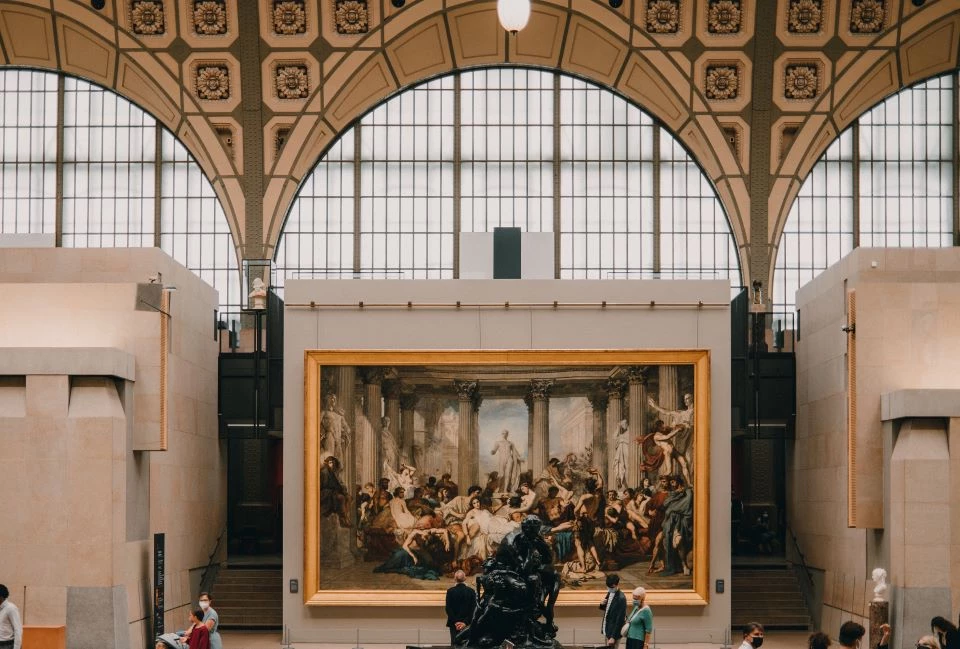
When visitors walk through the Musée d’Orsay today, surrounded by glowing Monets and swirling Van Goghs, few realize that many of these masterpieces were once rejected by the Louvre. The world’s greatest Impressionist art collection exists precisely because the art establishment of the 19th century said “no.”
In mid-19th-century Paris, the Louvre Museum represented classical perfection, symmetry, myth, and historical grandeur. Paintings that dared to show real people in daily life or visible brushstrokes were considered scandalous by the Academy. Artists like Monet, Manet, Renoir, and Degas broke every rule the establishment held sacred. Their work was refused by official salons, critics mocked them, and the Louvre refused to hang their art.
But those rejections ignited an artistic revolution. When Emperor Napoleon III allowed them to exhibit in the alternative Salon des Refusés (Exhibition of the Rejected) in 1863, the world saw the birth of Impressionism—the movement that would forever change how we see color, light, and truth.
Decades later, as the art world began to recognize the beauty of these “rebels,” France needed a proper place to celebrate them. The Louvre remained devoted to pre-1848 art, leaving modern works without a suitable home. That’s how an abandoned train station, the Gare d’Orsay, was spectacularly transformed into a temple for modern and Impressionist art.
When the Musée d’Orsay officially opened in 1986, it symbolically became the museum of second chances; a place where once-dismissed artists were finally honored. Today, the very same paintings that the Louvre once rejected hang proudly just across the Seine, facing the institution that turned them away.
The Musée d’Orsay collection features revolutionary painters who challenged the 19th-century art establishment. Here are the key masters you will discover:
His painting Le Déjeuner sur l’herbe shocked Paris in 1863 for showing an unclothed woman picnicking with two clothed men. Today, it stands as a vital cornerstone of modern art.
His seminal work, Impression, Sunrise, was initially mocked by critics as unfinished; yet it ultimately gave the Impressionism movement its name.
These visionary artists insisted on painting everyday life as it truly was, filled with natural sunlight, swift motion, and beautiful imperfection.
The historical journey of the Musée d’Orsay reminds us that innovation often begins with rejection. What the world laughs at today may be celebrated as a masterpiece tomorrow. Every single brushstroke inside its galleries represents a quiet victory over criticism, proving that true creativity always finds its home.
So next time you book your Orsay Museum tickets, remember: you’re not just visiting a standard art gallery. You’re walking directly through history’s greatest comeback story.
You might also like...
Secure Payment
Ways You Can Pay









Cityzore is administrated by Global Tours and Tickets Company
Copyright © 2026 Cityzore. All Rights Reserved

 Türkçe
 Français
 Русский
 Español
 Deutsch
 Italiano
 Português
 Nederlands
 عربى
عربى